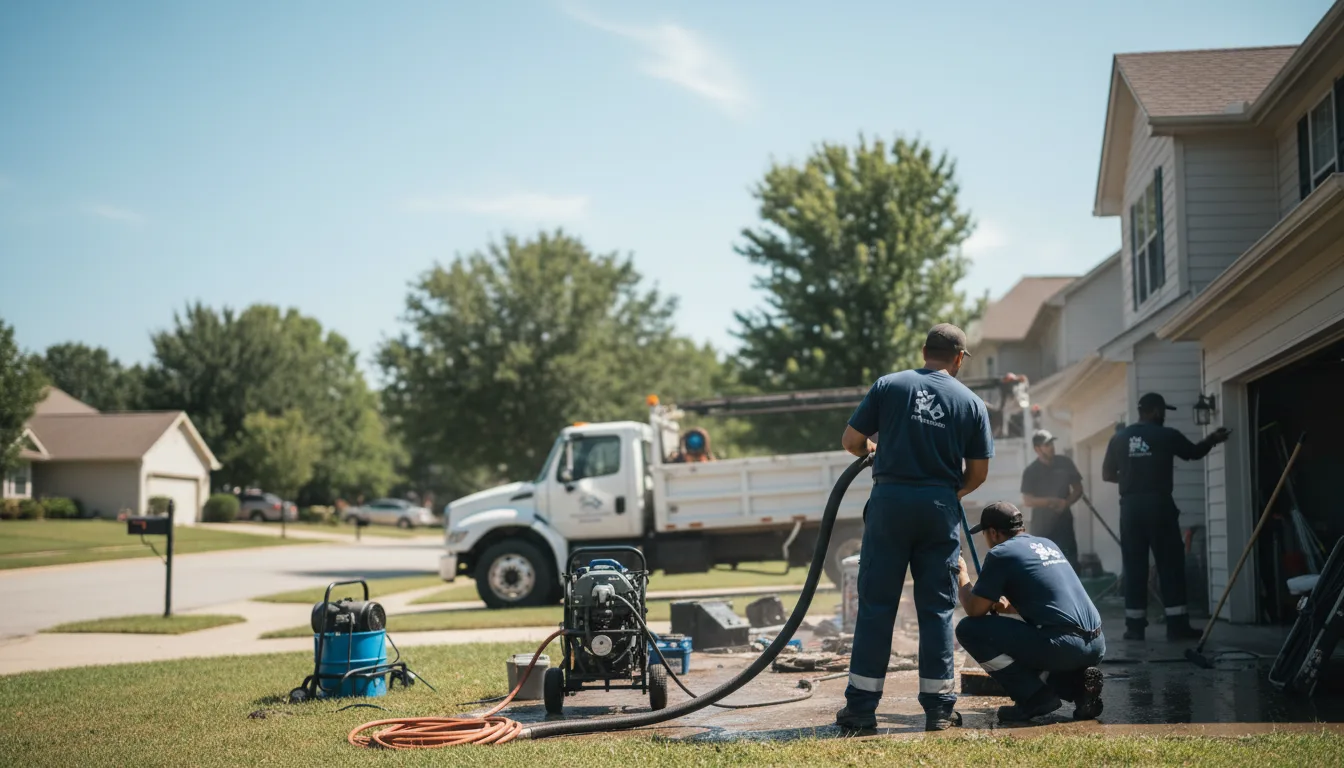
Crawl space water removal comes up in older Spanish Fork homes and in the ranch houses and farmhouses around the valley that were built without a full basement. Water gets in from groundwater during runoff, a leaking supply line, or a sewer line break under the house. Because nobody goes down there, it can sit for weeks.
Standing water in a crawl space raises the humidity in the whole house. It soaks the fiberglass batts between the floor joists until they sag and fall. It rots the sill plate and grows mold on the underside of the subfloor. You might notice a musty smell in the rooms above, or floors that feel soft or cold.
Our crawl space water removal starts with a submersible pump for standing water, then a wet vac for what's left. Wet vapor barrier and insulation come out. We check the joists, beams and subfloor with a moisture meter and look for mold. Then we set a dehumidifier and air movers in the crawl space and close the vents during drying so we aren't fighting outside air.
Once it's dry, we can lay a new 6 mil or heavier vapor barrier over the soil. If the water came from groundwater, a crawl space sump or better grading outside is usually the long-term fix, and we'll tell you what we saw down there.
If a pipe in the crawl space froze and split, our frozen pipe water damage page covers what to check. For a musty smell that stays after drying, see odor removal.