Structural drying in Spanish Fork is the part of water damage work you can't see. The carpet looks dry after a day. The bottom plate of the wall, the subfloor under the vinyl and the insulation behind the drywall are a different story, and that is where mold starts if drying stops early.
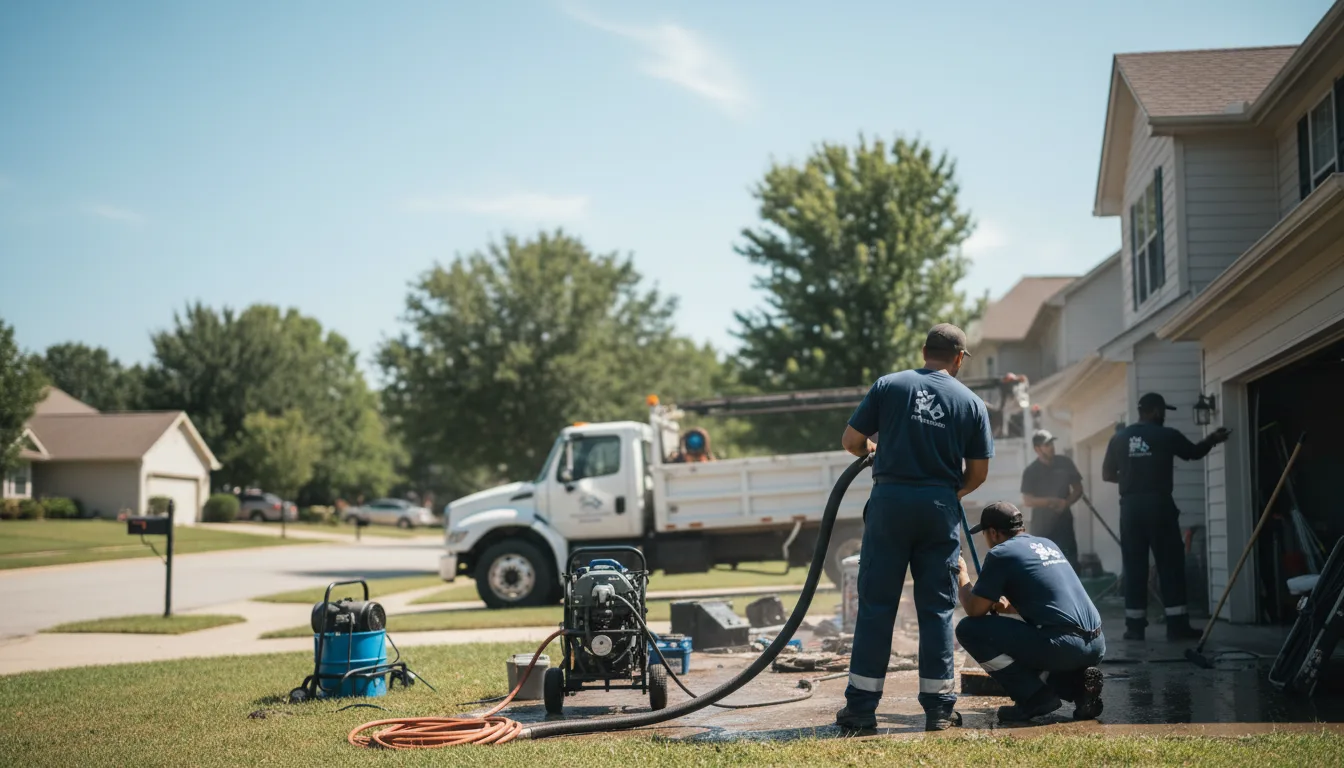
Our crew sets up a drying plan based on the room size, the materials that got wet and the indoor humidity. Utah air is dry, which helps. It also fools people into turning the fans off too soon. We use low-grain refrigerant (LGR) dehumidifiers because they keep pulling moisture when the air is already fairly dry, and air movers aimed along the wall line.
For wet walls we sometimes drill small holes at the base behind the baseboard and push air into the cavity. That can save drywall that would otherwise need a flood cut. Hardwood gets drying mats. Cabinets get their toe kicks pulled so air can reach underneath.
Structural drying is measured, not guessed. We take pin and pinless moisture readings at the same marked spots every day and compare them to a dry reference point in an unaffected room. The equipment stays until the numbers match. Most jobs run three to five days. Heavy framing or a concrete slab can take longer.
Those daily logs go to your adjuster. They are the proof that the drying was done right, and they are the first thing an adjuster asks for. See our claim documentation page for how we handle that part.