Hardwood floor drying is a race. Solid oak or maple soaks up water from the bottom, the boards swell, and within a day or two the edges rise higher than the centers. That's cupping. Left long enough, the boards buckle and lift off the subfloor. Engineered hardwood can delaminate as the plywood layers separate.
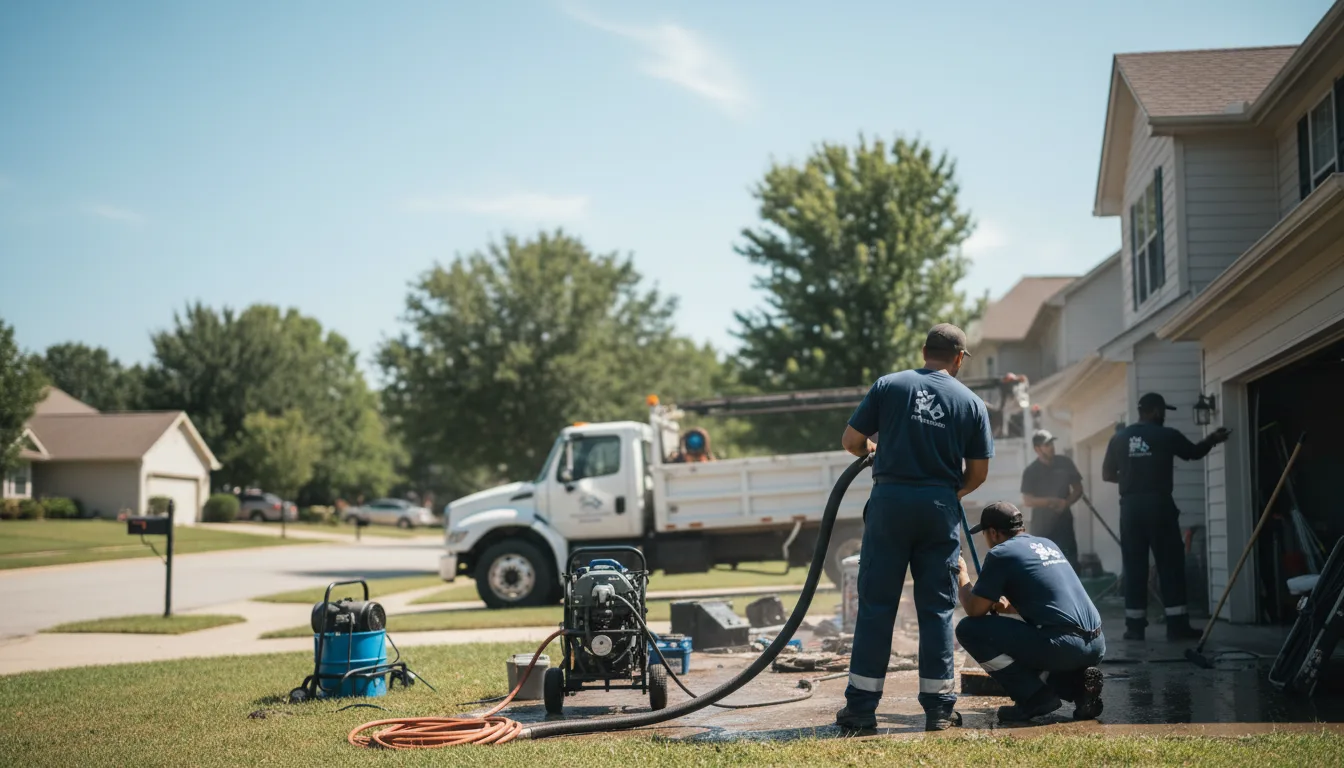
Our crew uses panel drying mats, a system that seals against the floor surface and pulls moisture up through the wood under vacuum. Paired with an LGR dehumidifier, it dries the boards and the subfloor underneath without pulling up the whole floor. We check readings daily with a pin meter and compare the wet area to dry boards in another room.
Hardwood floor drying works best if it starts fast. Mild cupping often flattens out as the wood dries, and after a few weeks of stable moisture the floor can be sanded and refinished. If boards have buckled, split or started to grow mold underneath, some replacement is usually needed. We tell you honestly which way a floor is headed after the first few days of readings.
Don't sand a cupped floor while it's still wet. When the wood dries later, the edges shrink and you end up with crowned boards that sit higher in the middle. That mistake can't be undone.
Utah's dry climate helps us here. Indoor humidity is low much of the year, so floors dry faster once the water is out. It also means a floor that dries too fast can gap, so we watch that too. Vinyl plank and laminate usually have to come up so we can dry the subfloor under them, which is part of our structural drying work.